

Applications of Fire Resistant Conduits
Comments Off on Applications of Fire Resistant ConduitsFire safety is a key consideration in the design and operation of electrical systems. During a fire, exposed wiring can fail quickly, interrupting power to equipment and life safety systems that are needed most. Choosing the right conduit helps protect electrical cables from heat, flames, and physical damage while supporting the continued operation of critical circuits.
A fire resistant electrical conduit is commonly used in facilities where electrical reliability and fire protection are essential. From industrial plants and healthcare facilities to transportation infrastructure and commercial buildings, these conduit systems provide an added layer of protection for wiring installed in demanding environments. Selecting a conduit that matches the application’s performance requirements can also support compliance with applicable electrical and fire safety standards.
What Is a Fire Resistant Electrical Conduit?
A fire resistant electrical conduit is built to help protect enclosed wiring during high-temperature conditions while also providing mechanical protection during everyday operation. Compared with standard conduit systems, fire-resistant options are intended for installations where circuit protection remains a priority during emergency situations.
Depending on the application, these conduit systems may also provide resistance to moisture, chemicals, corrosion, vibration, and impact. That combination makes them suitable for facilities that operate in challenging conditions every day, not just during a fire event.
Choosing the right conduit starts with understanding the installation environment, the type of wiring being protected, and the applicable codes that govern the project.
- Common considerations include:
- Heat and flame resistance
- Mechanical strength
- Exposure to chemicals or corrosive materials
- Indoor or outdoor installation
- Compatibility with conduit fittings and accessories
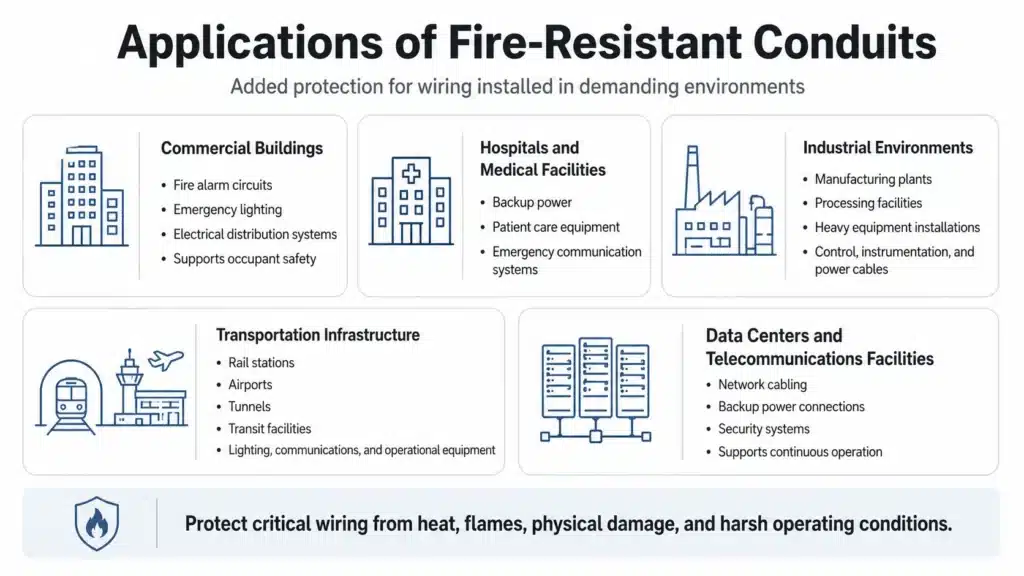
Key Applications of Fire Resistant Conduits Across Industries
Fire-resistant conduit systems support a wide range of critical installations. In commercial buildings, they are often specified for fire alarm circuits, emergency lighting, and electrical distribution systems that support occupant safety. Hospitals and medical facilities also depend on protected wiring for backup power, patient care equipment, and emergency communication systems.
Industrial environments place additional demands on electrical infrastructure. Manufacturing plants, processing facilities, and heavy equipment installations require conduit systems that perform reliably while exposed to heat, vibration, and harsh operating conditions. A fire resistant cable conduit helps protect control, instrumentation, and power cables where equipment reliability is essential.
Transportation infrastructure also benefits from these conduit systems. Rail stations, airports, tunnels, and transit facilities rely on protected electrical circuits to support lighting, communications, and operational equipment during emergency conditions. Data centers and telecommunications facilities use similar solutions to protect network cabling, backup power connections, and security systems that support continuous operation.
Benefits of Using Fire Resistant Cable Conduit
Selecting the right fire resistant cable conduit gives your project added protection where electrical systems must continue operating under demanding conditions. It helps protect critical wiring, reduces the risk of damage from heat exposure, and supports long-term system reliability. Many conduit systems also provide resistance to corrosion, moisture, and mechanical wear, helping reduce maintenance needs over time.
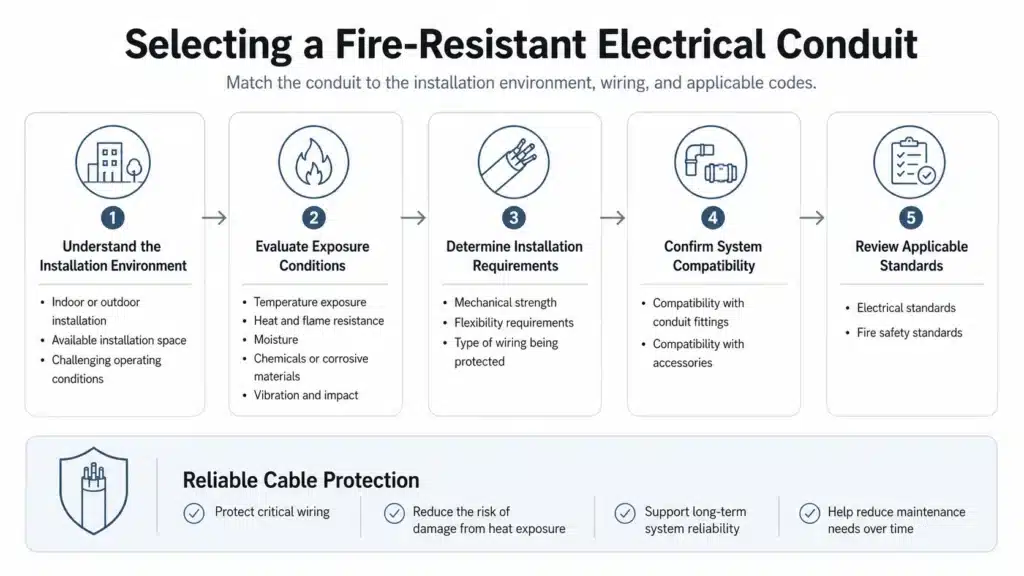
Factors to Consider When Selecting Fire Resistant Conduit
Every installation has different requirements. Consider the operating environment, temperature exposure, flexibility requirements, available installation space, and the applicable electrical and fire safety standards. Compatibility with conduit fittings is also important for long-term performance.
For projects requiring dependable conduit solutions, Anamet Electrical, Inc. offers flexible conduit systems developed for demanding industrial and commercial applications. With products engineered for challenging environments, customers can select solutions that match their installation requirements while supporting reliable cable protection.
Keep Critical Connections Protected, Before They Matter Most
Fire safety starts with the right electrical protection. Choose conduit solutions that are built for demanding environments and backed by decades of engineering experience. Contact Anamet Electrical, Inc. to find the right conduit system for your next project and help protect the circuits your operation depends on.
Metal vs. Non-Metal Conduits
Comments Off on Metal vs. Non-Metal ConduitsElectrical conduit is a protective pathway used to route and shield electrical wiring in residential, commercial, and industrial environments. Its primary function is to contain wiring and reduce exposure to physical damage, moisture, and environmental stress.
Selection between conduit types has a direct impact on installation performance, long-term durability, and system reliability. The two main categories used across applications are metal electrical conduit and non metallic conduit. Each serves a specific purpose depending on the installation environment, required protection level, and installation conditions.
Metal Electrical Conduit
Metal electrical conduit is used in applications that require strong physical protection for wiring. Made from steel or aluminum, it is commonly installed in commercial and industrial environments where cables may be exposed to impact, heavy equipment, or demanding operating conditions. It also supports grounding requirements in many electrical systems.
Key points:
- High resistance to crushing and physical damage
- Suitable for exposed and high-risk installations
- Supports electrical grounding
- Available in rigid and semi-flexible forms
It is typically used in industrial facilities, utility systems, and equipment areas where durability and protection are priorities.
Flexible Metal Conduit
Flexible metal conduit is designed for areas where wiring must accommodate movement, vibration, or tight installation spaces. It is commonly used as a connection between fixed conduit runs and equipment that shifts during operation.
Key points:
- Bendable spiral metal construction
- Helps absorb vibration from equipment
- Best for short connection runs
- Works with standard fittings
It is commonly installed in motors, HVAC systems, pumps, control panels, and machinery connections where flexibility is required.
Non Metallic Conduit
Non metallic conduit is used where corrosion resistance, ease of handling, and faster installation are important. Made from PVC or similar materials, it is widely used in residential and commercial wiring systems.
Key points:
- Lightweight and easy to install
- Resistant to corrosion and many chemicals
- Non-conductive (no grounding required)
- Cost-effective for large-scale runs
It is often used in underground wiring, interior installations, and environments where moisture or corrosion is a concern rather than heavy physical impact.
Metal vs Non Metallic Conduit: Practical Differences
The choice between metal electrical conduit and non metallic conduit depends on installation priorities rather than a single universal standard.
Metal systems are typically used where physical protection is the primary concern. Non-metal systems are often selected where corrosion resistance and installation efficiency carry more weight.
Key differences include:
- Strength: metal conduit provides higher impact resistance
- Corrosion resistance: non-metal conduit performs better in wet or chemical areas
- Installation: non-metal conduit is lighter and quicker to install
- Electrical grounding: metal conduit can serve as a grounding path, while non-metal does not
Where Each Conduit Type Fits Best
Metal electrical conduit is used where wiring needs strong physical protection. It is common in industrial plants, commercial buildings, outdoor runs, and service areas where impact resistance and durability matter.
Flexible metal conduit is used at connection points where equipment moves or vibrates. It works best in short runs such as motor connections, HVAC systems, control panels, and machinery setups where flexibility is needed.
Non metallic conduit is selected for corrosion resistance and faster installation. It is widely used in residential work, interior commercial wiring, underground runs, and moisture-prone environments.
Each type serves a clear role: metal for strength, flexible metal for movement, and non metallic for corrosion resistance and installation efficiency.
Wire It Right, Not Twice
Wiring systems don’t get second chances. Whether it’s metal electrical conduit, flexible metal conduit, or non metallic conduit, ANAMET Electrical provides solutions designed to perform in demanding conditions without compromise.
From heavy-duty industrial protection to flexible connections and corrosion-resistant runs, the right Sealtite® system is ready when you are. Connect with ANAMET Electrical to find the right conduit solution for your application.